98. Donovan - Sunshine Superman (1967)
Track Listing1. Sunshine Superman2. Legend Of A Girl Child Linda3. Three Kingfishers4. Ferris Wheel5. Bert's Blues6. Season Of The Witch7. The Trip8. Guinevere9. The Fat Angel10. CelesteReviewSo, Donovan, yes. Mellow Yellow it ain't fortunately. It is actually a great example of British folk revival, we will have more interesting ones in the future, but Donovan is definitely a defining artist in the whole movement and also the one with the greatest commercial success.This is both good and bad, you can tell that this album was made to sell, and no matter how good the track Sunshine Superman is, it is a bit out of place. It's a single to sell albums and it makes a good job as what it is. The rest of the album is actually more interesting and if you ignore some unremarkable tracks that it does have it is actually quite good.Notice I say quite, it didn't really blow my mind with the notable exception of Season of The Witch where Donovan seems to sound like the Velvet Underground for parts of it. And that is indeed laudable. Other tracks like Legend of A Girl Child Linda are great narrative tracks with the whole medieval English feel to them. A great album, but really not that remarkable, and I love folk, sometimes more than life itself. Stream it from Napster or Buy it from Amazon UK or US
or US .Track Highlights1. Season of The Witch2. Legend Of A Girl Child Linda3. Sunshine Superman3. Three KingfishersFinal Grade6/10Trivia
97. The Kinks - Something Else By The Kinks (1967) Track Listing
1. David Watts2. Death Of A Clown3. Two Sisters4. No Return5. Harry Rag6. Tin Soldier Man7. Situation Vacant8. Love Me Till The Sun Shines9. Lazy Old Sun10. Afternoon Tea11. Funny Face12. End Of The Season13. Waterloo SunsetReviewHere are the Kinks again, and this album really is something else. The Kinks sound like nothing else in the 60's at the same time they sound like a throwback and ahead of their time. In the way a retro-ish band would do it. Like Franz Ferdinand or The Coral for example, but the 60's equivalent.This is actually caused by their mild conservativism in ideological terms. The Kinks show a love for English society and all things English which will be later explored in Village Green more fully. But here tracks like Harry Rag or Waterloo Sunset are an example of this. A love for what is at the same time dismal and depressing but also representative of Englishness.I think you kind of have to live here for a while to understand how "Dirty old river, must you keep rolling /Flowing into the night /People so busy, makes me feel dizzy" can have a certain charm. On the other hand it might just be the way of coping with living here, starting to appreciate the horrid and the garbage in the streets.Anyway, The Kinks capture this with actually great songs, all of them are good, all of them will stick in your mind. And that is something the Kinks always did, make whole albums which are not only consistent but consistently catchy and lyrically thoughtful. So buy it from Amazon UK or US.Track Highlights1. David Watts2. Situation Vacant3. Waterloo Sunset4. Harry Rag
Final Grade
8/10TriviaFrom Wikipedia:Songs on the album composed by Ray Davies followed his affinity for strongly English-inspired subject matter, including the stately, harpsichord-laden "Two Sisters," the lazy shuffle of "End of the Season," the sardonic and hilarious "David Watts," and the other standout tracks "Death of a Clown" (written and sung by lead guitarist Dave Davies) and "Afternoon Tea." The album is capped by the otherworldly beauty of the hit single "Waterloo Sunset," considered by many to be the career apogee of Davies' songwriting.The songs on the album were recorded over a transitional phase of Davies' songwriting career, between the fall of 1966 and the summer of 1967. During this time he and the Kinks had cut back on touring, and had begun recording and stockpiling songs for his as-yet poorly defined "village green" project. Also, following the great commercial and personal success of the "Waterloo Sunset" single in May 1967, Davies became less focused on hits and more intent on exploring his own songwriting interests. In fact, the album title may come from Davies' appeal to the Kinks' management in the summer of 1967 that he wanted to do "something else" besides writing hit singles.The album is unusual in the Kinks' catalogue from this period for the inclusion of three songs composed by guitarist Dave Davies, including the solo hit single "Death of a Clown." Based on the unexpected success of the song, the younger Davies began exploring a solo career. The followup singles did not meet with the same success, and by mid-1969 his solo ambitions would be set aside for a decade.The album sold poorly in the UK, in part because it competed with budget-priced compilation albums of early Kinks hits from 1964-1966. Also, singles-oriented Pye Records released "Waterloo Sunset" and "Death of A Clown" many months before the album itself, effectively dulling the enthusiasm of record buyers for the LP. The lack of success also reflected the changes occurring in pop music at the time, as well as The Kinks' rapid movement towards unfashionable song themes, a trend which culminated in the subsequent album The Kinks are the Village Green Preservation Society. They would score one more big UK hit single shortly after the release of Something Else with "Autumn Almanac," then would not have a big hit again until "Lola" in 1971.
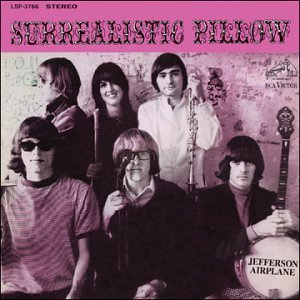
96. Jefferson Airplane - Surrealistic Pillow (1967) Track Listing
1. She Has Funny Cars2. Somebody to Love3. My Best Friend4. Today5. Comin’ Back to Me6. 3/5 of a Mile in 10 Seconds7. D. C. B. A.—258. How Do You Feel9. Embryonic Journey10. White Rabbit11. Plastic Fantastic LoverReviewFirstly I've got to make a disclaimer, White Rabbit is probably my favourite psychadelic song ever. And many other people's as well, it's is probably the most iconic song for acid use in the 60's and just for that this album deserves to be listened to. Other than that this album is a bit hit and miss. However, the hits are really very good, while the misses are only comparatively bland and unfortunately make the album not as cohesive as it could have otherwise been. Not all of it is like White Rabbit or Somebody To Love. Some tracks seem to be more on the pop-rock side of the fence that psychadelia. Fortunately most of the album is really very good and very trippy. If you are at all interested in late 1960's psychadelia this is an essential album, and this is the band that would later grace us with Jefferson Starship and just Starship followed by Jefferson Starship the Next Generation with such tracks of immortal beauty such as We Built This City. Is it better to burn out or to fade away? If Jefferson Airplane had burnt out after this the world would have been a better place... but not as funny. You can stream it from Napster or buy it from Amazon UK or US.
Track Highlights1. White Rabbit2. Somebody To Love3. Comin' Back To Me4. Embryonic Journey
Final Grade8/10TriviaI'll make this all about White Rabbit, from Wikipedia:"White Rabbit" is a psychedelic rock song from Jefferson Airplane's 1967 hit album Surrealistic Pillow, also released as a single, peaking at #8 on the Billboard Hot 100 in that form. First performed by composer Grace Slick with her band The Great Society during 1966, this striking song proved an inducement to convince members of the Airplane to lure Slick away to join them.One of Slick's earliest songs, written in either late 1965 or early 1966, it details parallels between the hallucinatory effects of LSD and the imagery found in the work of Lewis Carroll. References to Carroll's 1865 fantasy Alice's Adventures in Wonderland and its 1871 sequel Through the Looking-Glass pervade the song: the title character, the Dormouse, and the Red Queen. A century after the fact, Carroll was busy in the rock and roll world of 1967; that same year John Lennon would refer to Looking-Glass in his densely textured "I Am the Walrus" composition recorded by The Beatles, and Carroll has often been stated as an inspiration in the writing of Syd Barrett for the first Pink Floyd LP, The Piper at the Gates of Dawn.From the Jefferson Airplane website page at http://www.jeffersonairplane.com/grace.html: 'Grace has always said that White Rabbit was intended as a slap toward parents who read their children stories such as Alice in Wonderland (in which Alice uses several drug-like substances in order to change herself) and then wondered why their children grew up to do drugs. For Grace and others in the '60s, drugs were an inevitable part of mind-expanding and social experimentation. With its enigmatic lyrics, "White Rabbit" became one of the first songs to sneak drug references past censors on the radio. Even Marty Balin, Grace's eventual rival in the Airplane, regarded the song as a "masterpiece."'Set to a rising crescendo similar to that of Ravel's famous Boléro, the music combined with the song's lyric strongly suggest the sensory distortions experienced with hallucinogens, the song later utilized in pop culture to imply or accompany just such a state. "White Rabbit" is one of two songs, along with "Somebody to Love," that Slick brought with her to Jefferson Airplane from her earlier group The Great Society when she replaced original Airplane vocalist Signe Anderson.Cultural referencesThe drug-themed novel Go Ask Alice takes its name from the song, which includes the lyrics, "Go ask Alice/When she's ten feet tall." The book's protagonist is never named, but reviewers generally refer to her as "Alice" for the sake of convenience. The Columbia University health website Go Ask Alice!, however, does not take its name from the song.Neo is told to follow the "White Rabbit" in the Matrix. One of many Matrix metaphysical "waking up" metaphors.The song has been used several times on The Simpsons, such as in the episode "D'oh-in In the Wind." It mostly accompanies scenes when the effects of ingested drugs, such as marijuana, peyote, or LSD, are beginning to kick in.The song also features in the thriller The Game at a scene where the film's main protagonist is being subjected to extremely powerful psychological attacks on his sanity and sense of safety.The character of Richard Nixon sings this song in the Futurama episode "A Head in the Polls," telling his audience, "I'm meeting you halfway, you stupid hippies!"The song was mentioned in Hunter S. Thompson's book Fear and Loathing in Las Vegas in the memorable scene in which Dr. Gonzo (the attorney) asks Thompson to throw the tape deck into the bath with him during a bad acid trip: "…And when it comes to that fantastic note where the rabbit bites its own head off, I want you to throw that fuckin' radio into the tub with me!"The song was also featured in Oliver Stone's Platoon; it is played in the background of the "Feel Good Cave" as the soldiers are getting high. It also forms the main menu music of the PC game Battlefield Vietnam.More recently, the song was used on an episode of The Tonight Show with Jay Leno. Jay Leno talked about a town that has baseball "the way it used to be"; the hometown of that team is known for smoking cannabis, and this song played when they showed people in a park smoking.In 2005 the song was used on C.R.A.Z.Y., a film directed by Jean-Marc Vallée.Also in 2005 "White Rabbit" was featured in a delicate drug-related scene in Atom Egoyan's movie Where The Truth Lies, starring Kevin Bacon, Colin Firth, and Alison Lohman.A "White Rabbit" cover portion has been a consistent part of Blue Man Group shows since their inception.The song was played during an episode of HBO's The Sopranos. During a scene when Tony Soprano is struggling with taking more Prozac for his Panic Attacks.A commercial for the video game Red Faction 2 used this song as well.In the movie Stoned from 2005 the song is played when the character of Brian Jones takes LSD for the first time.The song is played during a drug-related skit on an episode of The Daily Show.CoversThe song was covered in the following years: * 1971 – by the jazz guitarist George Benson * 1980 – by the punk band The Last Words * 1980 – by the punk / gothic rock band The Damned [1] * 1981 – by the post punk band The Mo-Dettes in a Peel Session * 1985 – by the hardcore punk band Ruin...[2]for their White Rabbit promotional cassette and later (1986) included in their Fiat Lux Album [3] * 1987 – by the metal band Sanctuary * 1987 – by the rock band Act * 1989 – by the hardcore punk band Slapshot * 1990 – by the house music duo David Diebold & Kim Cataluna [4] * 1995 – by The Murmurs (MCA Records) * 1996 – by the Icelandic singer-songwriter Emiliana Torrini * 1996 – by the Norwegian Heavy Metal Band In The Woods for their White Rabbit EP and later (2000) included in their Three Times Seven On A Pilgrimage Album [5] * 2001 – by the industrial band Collide [6] * 2004 – by the performance art / experimental rock group Blue Man Group with vocals by Esthero [7] * 2006 – remixed by the psychedelic trance act Fuzzion as Little Girl on the album Black Magic [8] * 2006 – by the Brechtian punk cabaret duo The Dresden Dolls at the Bonnaroo Music Festival * 2006 – by the Omaha ska punk band UmlaUt. * 2006 – by The Cadets Drum and Bugle Corps in their show "Volume 2: Through The Looking Glass."
95. The Young Rascals - Groovin' (1967) Track Listing1. Girl Like You2. Find Somebody3. I'm So Happy Now4. Sueño 5. How Can I Be Sure6. Groovin'7. If You Knew8. I Don't Love You Anymore9. You Better Run10. Place in the Sun11. It's LoveReviewThis is a mildly interesting R&B album with a couple of very good songs. If anything can be said about it, it is the fact that it is very nice. Fortunately, however, there is a certain twist to it. Groovin' doesn't stay comfortably in the pleasing R&B section, they explore both with effects and with psychadelia and garage rock. Therefore not your garden variety easy-listening. Even so, the album stands out more through it's pleasentness than it's innovations. This is at the same time it's strength and downfall. It is non-offensive but also doesn't push itself far enough. There is of course the Young Rascals' most famous track in Groovin' but it certainly isn't the most original thing here. Other tracks are much more interesting, like It's Love where the track starts with a perfectly out of place piano to develop into a great track.It is good, no doubt, but not something I will be adding to my Mp3 player. So, you can either stream it from Napster or buy it from Amazon UK
 or US
or US .Track Highlights1. It's Love2. You Better Run3. Sueno4. Groovin'Final Grade7/10TriviaFrom Wikipedia: Their first minor hit was "I Ain't Gonna Eat Out My Heart Anymore" (1965), followed by the #1 single "Good Lovin'" (1966, originally by the Olympics). Soon, the band began to mature as songwriters and released other hit songs written themselves, including "Groovin'" (recorded in 1967, it's one of their best-known hits), "It's Wonderful", "How Can I Be Sure" (which got to Number 1 in the UK when Coverd by David Cassidy) and "A Beautiful Morning" (1968).Their best-remembered song was "People Got to Be Free" (1968), a passionate plea for racial tolerance. Unusual for their time, the Rascals refused to tour on segregrated bills. After "People Got to Be Free", the Rascals never regained their former fame or had as large a hit.In 1970 Eddie Brigati left the group, followed by Cornish in 1971.Cavaliere and Danelli released two more albums as "The Rascals", Peaceful World and The Island Of Real, using other musicians and singers. They finally disbanded in 1972.Cavaliere released several solo albums throughout the 1970's. Brigati (with his brother David) released "Lost in the Wilderness" in 1976. Cornish and Danelli worked together in other groups, including Bulldog and Fotomaker.In 1982, Cavaliere and Danelli joined Steve Van Zandt in Little Steven and the Disciples of Soul, Van Zandt's project between his stints with the E Street Band.The (Young) Rascals were inducted into the Rock and Roll Hall of Fame in 1997.
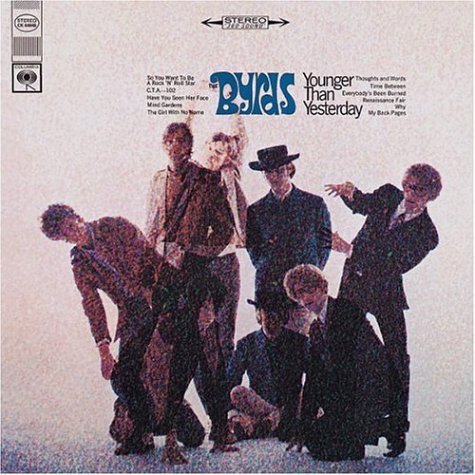
94. The Byrds - Younger Than Yesterday (1967)
Track Listing1. So You Want To Be A Rock 'N' Roll Star2. Have You Seen Her Face3. C.T.A.-1024. Renaissance Fair5. Time Between6. Everybody's Been Burned7. Thoughts And Words8. Mind Gardens9. My Back Pages10. The Girl With No Name11. WhyReviewIf there is something you can say about the Byrds, it is that they always manage to please. They have a lot of albums in this list and until now they have all deserved inclusion. This is no exception and it may actually be the best Byrds album reviewed until now. In this album the Byrds move slightly away from pleasant folk-rock into a more experimental territory and they do it perfectly. In some songs it is more crass, like in C.T.A.- 102 where the inclusion of alien commentary and UFO sounds on the music might be a bit too much, and yet it works. On the rest of the album The Byrds use a lot of backmasking to very good effect, it doesn't sound weird and experimental for experimentalism's sake, it actually improves the music's texture and melody... if you can imagine that. The Byrds use backmasking for melodic purposes instead of the more common: "because it's weird and we're on drugs" reason.Definitely an album to get and listen to repeatedly. This last reccomendation is essential, Byrds albums really benefit from repeated listenings, while they may sound quite normal and even trite the first go they reveal beautiful hidden depths. You can stream it from Napster or buy it from Amazon UK or US.Track Highlights1. Everybody's Been Burned2. Thoughts And Words3. So You Want To Be a Rock 'N' Roll Star4. C.T.A. - 102Final Grade
9/10TriviaFrom Wikipedia:Despite the album's moderate chart performance, its critical stature has grown substantially over the years. In 2003, the album was ranked number 124 on Rolling Stone magazine's list of the 500 greatest albums of all time.Younger Than Yesterday was remixed and remastered at 20-bit resolution as part of the Columbia/Legacy Byrds series, reissued in an expanded form on April 30, 1996. The six bonus tracks included both sides of the "Lady Friend" single, another exemplary Crosby track puzzlingly left off the album "It Happens Each Day," a throwaway written for a Tony Curtis/Claudia Cardinale film vehicle of the same name, "Don't Make Waves," and an instrumental "Mind Gardens" as a hidden track.